
A subwoofer is the speaker that shakes your room the most – literally. When it stands directly on the floor, a lot of its energy goes into the floor, the walls and the furniture. On wooden or suspended floors you hear it as a boomy, slow bass, rattling objects and, in apartments, unhappy neighbors. Isolating the subwoofer from the floor keeps more of that energy in the bass you actually want to hear.
There are two ways to do it: an isolation platform or isolation feet. Here is how to choose.
Option 1: an isolation platform
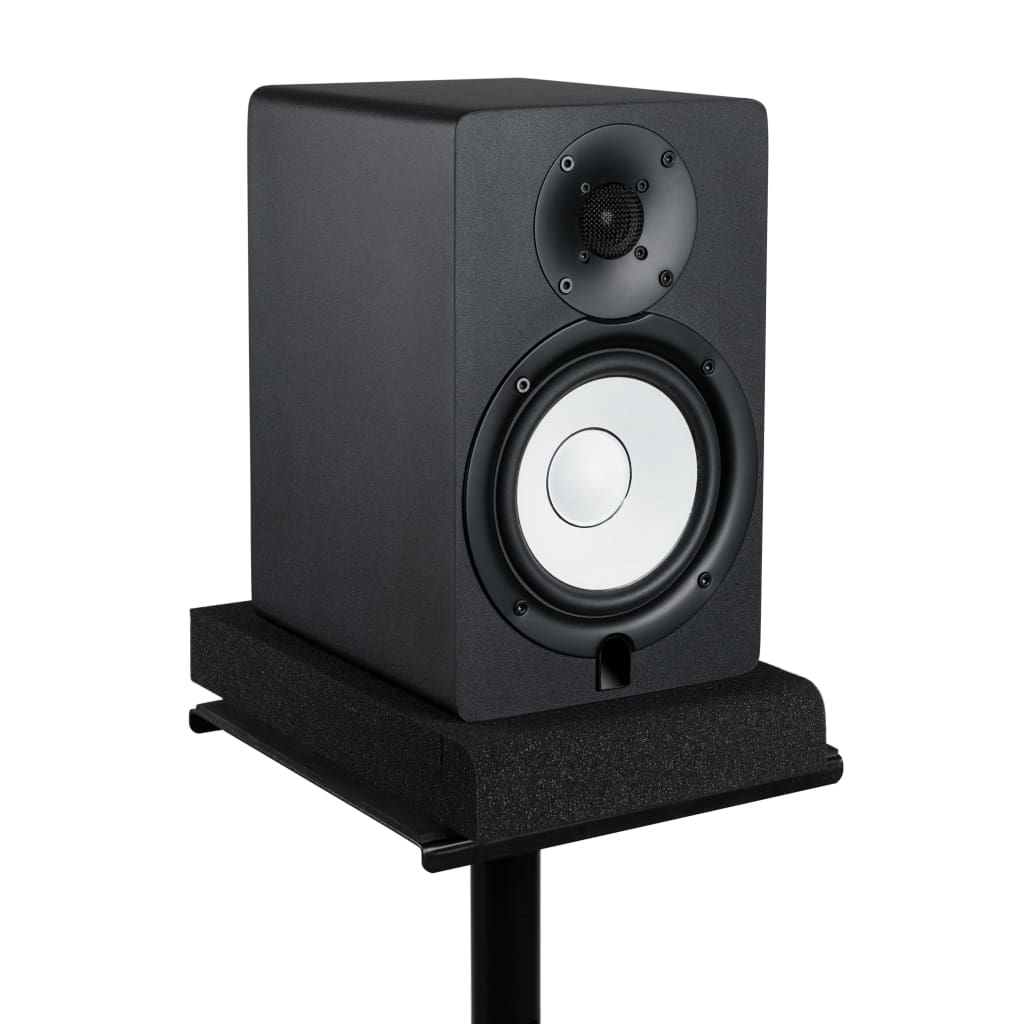
A platform is a rigid board on a layer of high-density foam. The subwoofer stands on a firm, level surface while the foam decouples it from the floor. The VibeBoss platforms use an MDF board, high-density foam (50 kg/m³), CR foam strips on top and a non-slip base.

- VibeBoss P10 – 13.75" × 15.75", for 8"–10" subwoofers up to 90 lb.
- VibeBoss P12 – 20" × 17", for 12"–15" subwoofers up to 200 lb, and any sub whose base is too large for the P10.
Choose a platform if: your subwoofer is front- or side-firing, its base fits the platform, and you like a clean, solid look. A platform also spreads the weight evenly, which is kind to soft floors.

Option 2: isolation feet
Feet replace or sit under the subwoofer's own feet and lift the cabinet slightly off the floor.
- subPods – premium silicone and metal feet, up to 200 lb per set of four, no adhesive. They work on carpet as well as on wood and tile.
- SubCone – solid silicone cones, up to 165 lb per set of four, no adhesive and no residue.

Choose feet if: your subwoofer is very large or heavy, its base doesn't fit a platform, or it fires downward and you want to keep clear space under the cabinet.
Down-firing subwoofers
If the driver or port points at the floor, the gap between the cabinet and the floor is part of the design. Feet keep the cabinet lifted, so that gap stays open – that's why we usually suggest subPods or SubCone for down-firing subs. A platform works too, but check that the subwoofer's own feet still leave the opening clear.

Carpet, wood or tile?
| Floor | Good choice |
|---|---|
| Carpet | subPods – stable footing that keeps the sub level on soft carpet; or a VibeBoss platform for a firm, flat base |
| Wooden or suspended floor | VibeBoss P10 / P12 or subPods – this is where isolation makes the biggest difference |
| Tile or concrete | Any option; SubCone is a simple, affordable choice |
How to pick the right size
- Measure the subwoofer's base (width × depth) and check its weight.
- If the base fits 13.75" × 15.75" and the sub weighs up to 90 lb, the P10 is the platform for you.
- Larger or heavier (up to 200 lb)? Go for the P12.
- Base larger than the P12, or you prefer feet? Use subPods (up to 200 lb) or SubCone (up to 165 lb).
Frequently asked questions
Can a subwoofer platform go on carpet?
Yes. The platform gives the subwoofer a firm, level surface instead of letting it sink into the carpet.
Should I remove my subwoofer's original feet?
If they unscrew, you can remove them and place the sub directly on four isolation feet near the corners. If they are glued-on rubber bumpers, leave them and place the feet under the cabinet corners – just don't balance a foot on top of a small round bumper.
Which platform for a 12" subwoofer?
Most 12" subwoofers need the VibeBoss P12. A compact 12" model whose base fits 13.75" × 15.75" and weighs under 90 lb can also use the P10.
Not sure which one fits your model?
Type your subwoofer model into the Size Finder or ask Tom, our assistant. Every order is covered by our 60-day money-back guarantee.