
Speaker isolation comes in four main forms: foam pads, silicone feet, platforms and desktop stands. They all do the same basic job – they decouple the speaker from the surface it stands on, so less vibration goes into your desk, shelf or floor – but each one suits a different setup. This guide helps you pick the right one in a couple of minutes.
Why decoupling matters
A speaker cabinet vibrates while it plays. If it stands directly on a desk or shelf, that vibration passes into the surface, which starts to resonate and adds its own boom to the bass. The result is a muddier low end and a stereo image that feels less precise. Placing something soft and well-damped between the speaker and the surface reduces that transfer, so you hear more of the speaker and less of the furniture.
1. Foam isolation pads – the all-rounder for desks
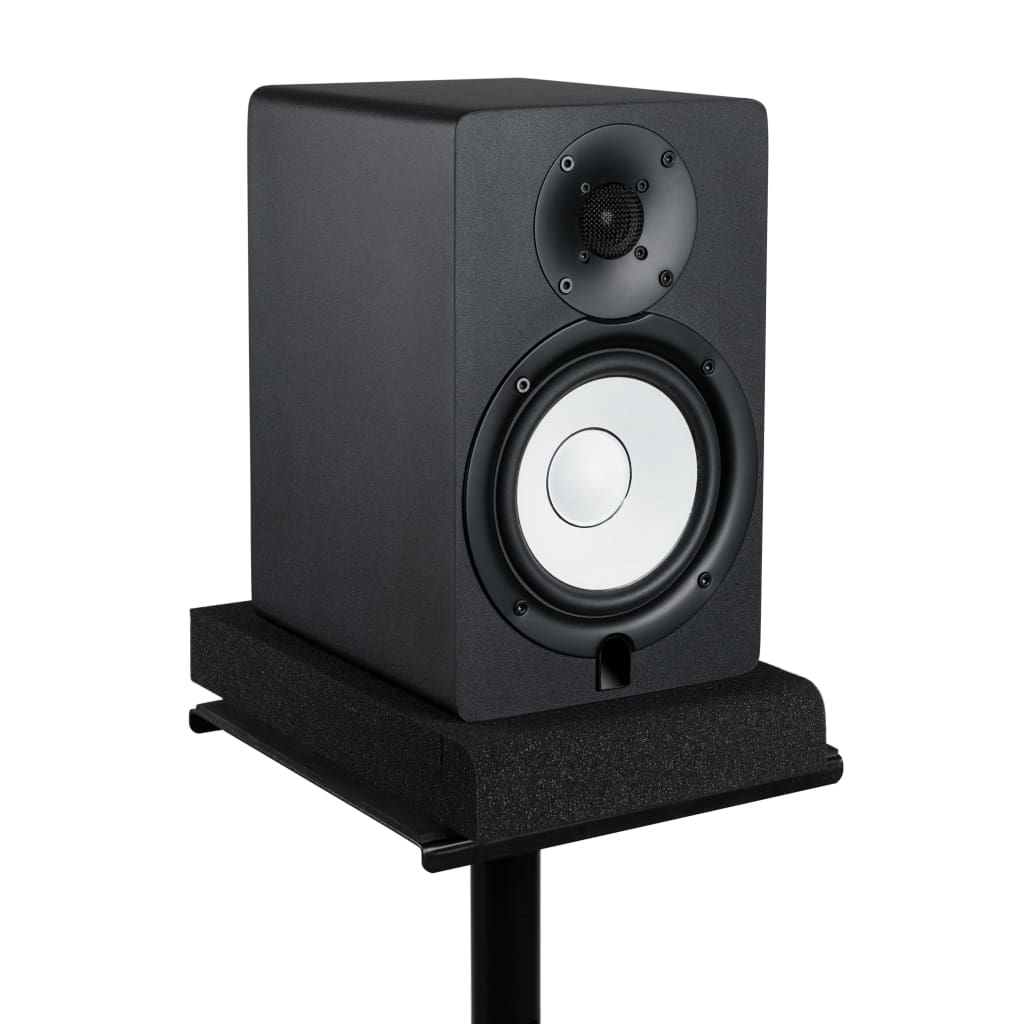
Foam pads such as the SMPad 4, SMPad 5 and SMPad 8 are blocks of high-density acoustic foam (50 kg/m³) sized for a speaker base. Their big advantage is the tilt: removable foam wedges let you angle the speaker up or down (up to five positions, including flat), so the tweeters point at your ears.
- Best for: studio monitors and bookshelf speakers on a desk or shelf.
- How to choose: by the speaker's base (width × depth) – SMPad 4 is 6.3" × 8", SMPad 5 is 7.5" × 11", SMPad 8 is 10.65" × 13".
- Unusual or large bases: SMPads are four separate bars you can space to fit any cabinet, including center speakers and small subwoofers.

2. Silicone isolation feet – small, discreet, flexible
Feet like the Subble range are silicone domes that stick under the speaker with 3M adhesive (removable without residue). They take almost no space and work on any surface.
- Best for: speakers where you want a minimal look, or a footprint that pads can't match.
- How to choose: by weight – Subble 1.2" (8 Pack) for 3"–5" speakers up to 24 lb each, Subble 1.8" (8 Pack) for 6"–8" speakers up to 45 lb each.
- Premium option: s-Pods combine premium silicone with a steel body, up to 44 lb per speaker.
- Trade-off: feet don't tilt the speaker.

3. Platforms – a solid, flat base
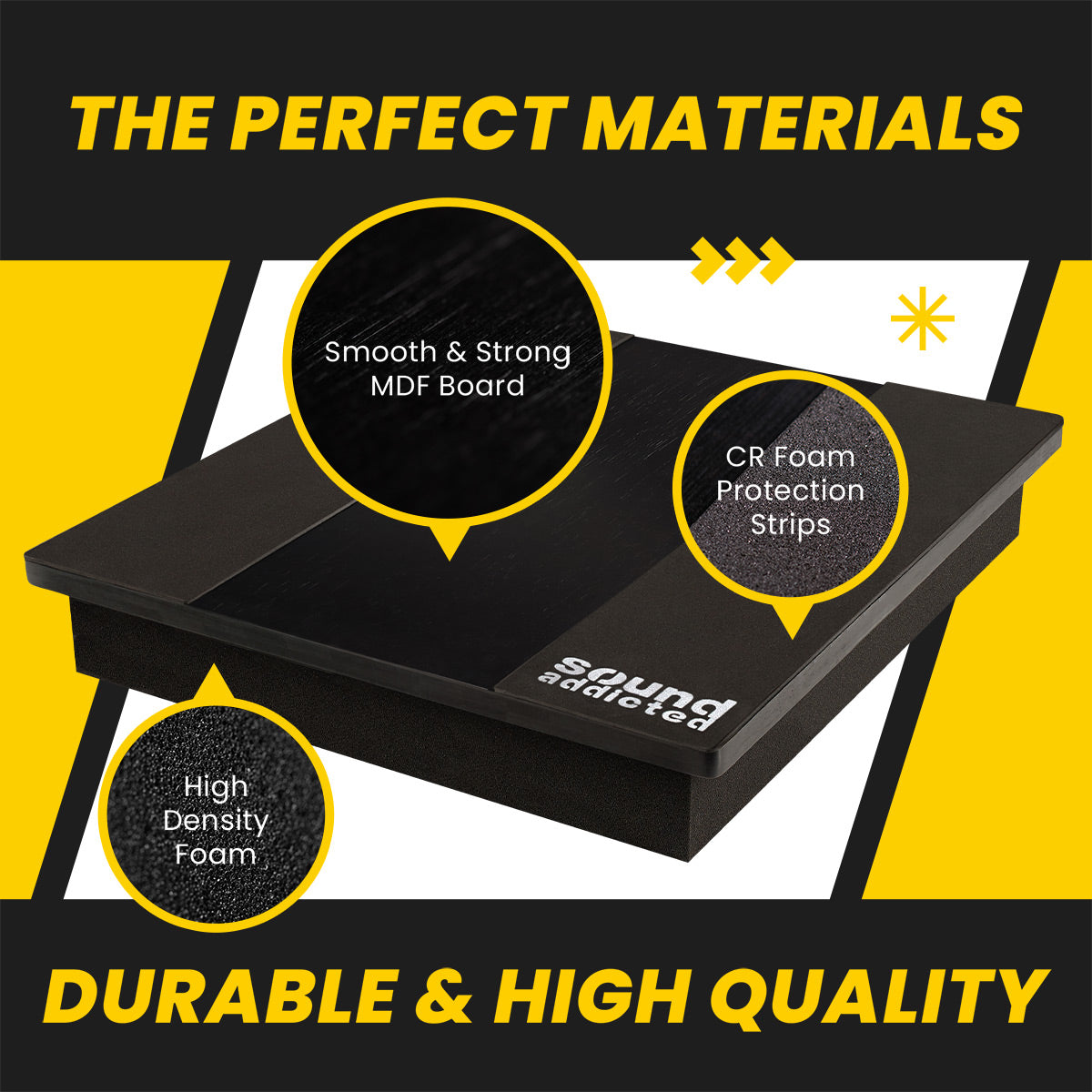
A platform puts a rigid MDF board on top of high-density foam. The speaker stands on a firm, level surface while the foam underneath does the decoupling. The VibeBoss platforms also have CR foam strips on top and a non-slip base.
- Best for: 5" monitors that are already at the right height (VibeBoss P5), and subwoofers on the floor (VibeBoss P10 for 8"–10" subs up to 90 lb, VibeBoss P12 for 12"–15" subs up to 200 lb).
- Trade-off: flat only – no tilt.

4. Desktop stands – tilt and lift for small speakers
The DSS desktop stands are made of solid silicone with a fixed 13° tilt toward the listener. They suit small 3"–5" desktop speakers (up to 30 lb per stand) and give both isolation and a better listening angle in one piece.

Quick decision guide
| Your situation | Best choice |
|---|---|
| Studio monitors on a desk, tweeters below ear level | Foam pads (SMPad 4 / 5 / 8) – use the wedges to tilt |
| 5" monitors, desk height already right | VibeBoss P5 platform |
| Small desktop speakers (3"–5") | DSS stands or SMPad 4 |
| Minimal look, no tilt needed | Subble feet or s-Pods |
| Large or unusual cabinet, center speaker | SMPads bars |
| Subwoofer on the floor | VibeBoss P10 / P12, or subPods / SubCone feet |
Frequently asked questions
Are foam pads or silicone feet better?
Neither is "better" – they solve slightly different problems. Pads give you tilt and a stable base for monitors on a desk; feet are smaller and more discreet. Many people use pads for monitors and feet for subwoofers or other gear.
Does the speaker's weight matter?
For foam pads, choose by the base size – the high-density foam carries much more than a typical monitor weighs. For feet, the weight does matter: pick a set rated for your speaker's weight.
Do I need isolation if my monitors are on stands?
Heavy, rigid floor stands already decouple quite well. Isolation makes the biggest difference on desks, shelves and hollow furniture.
How do I find the right size?
Use the Size Finder – type your speaker model or its base size – or ask Tom, our assistant. All orders are covered by our 60-day money-back guarantee.